RIO de Janeiro’s state government has revived plans for the 22km metro Line 3, saying that it plans to issue a construction tender by the end of the year. Discussions about the proposed line, which would connect Rio de Janeiro with the municipalities of Niterói and São Gonçalo have been on-going for over 50 years.
A major challenge for the project is an undersea section that would allow the line to pass under Guanabara Bay to reach Niterói on the eastern side of the bay. On February 18 state secretary of transport and urban mobility Washington Reis said that the government is in the process of developing a financing model for the new line, which it estimates will cost more than Reais 20bn ($US 3.4bn), and take between six and seven years to build.
The prospect of Rio and Niterói hosting the Pan American Games in 2031 has led to the renewed interest in the metro project, though it is unlikely by the government’s own timescale that the line would be open in time for that event.
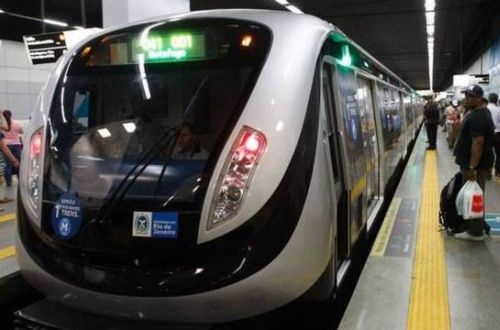
Separately, Reis confirmed that the government also expects to launch a tender later this year for an extension to Line 2/Green, which will involve the construction of a new station at Praça XV, in the city centre, at an estimated cost of Reais 6bn. Finance is expected to come from the National Bank for Economic and Social Development (BNDES).
Concessionaire change
The state government expects to make changes to Rio’s suburban rail network as the current concessionaire operator SuperVia, which has suffered from financial difficulties since the Covid pandemic, is to end its concession. An agreement to allow the transition of services to a new operator was signed between SuperVia and the state government at the end of last year.
A delegation from the state government will travel to China in April to purchase 30 new trains for operation on the Rio de Janeiro commuter rail network. SuperVia has taken trains out of service in recent years and with insufficient funds to repair them, has resorted to decreasing service frequencies.
For detailed data on metro projects across South America, subscribe to IRJ Pro.