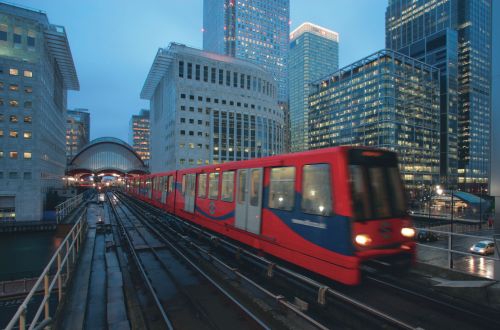
TRANSPORT for London (TfL) announced on October 1 the entry into service of the first of 54 five-car trains that CAF is supplying for the Docklands Light Railway (DLR), the 40km automated light metro network serving 45 stations in east and southeast London.
TfL ordered the new trains in June 2019, including 33 to replace the oldest members in the DLR fleet, the B90 trains which are over 30 years old. In addition, when all 54 new trains are in service, TfL says that they will increase capacity by over 50% on the DLR network, which carries over 90 million passengers a year.
The new CAF fleet, which was expected to enter service in April last year, has undergone extensive testing to ensure a smooth transition for passengers, with TfL introducing a temporary DLR timetable in June as B90 trains that had reached the end of their working life were withdrawn. As more new trains enter service, the full timetable will be restored, TfL says, bringing more frequent services across the network.
The rollout of the new fleet will continue over the coming months, will full replacement of the B90 fleet expected by the end of 2026. The other new trains will be introduced as quickly as possible to further boost capacity, TfL says.

The new CAF trains offer 10% more capacity than existing DLR fleet, featuring full-width gangways between the cars, air-conditioning, passenger information systems displaying live travel information, and charging points for mobile devices. There will be three multi-use areas for pushchairs, bicycles, and luggage per train, and three dedicated wheelchair spaces.
The new fleet forms of a wider DLR investment programme backed by government funding. This includes £260m from the Housing Infrastructure Fund, recognising the role DLR plays in stimulating new residential development, and a £500m loan from the National Wealth Fund created by the Treasury.
London City Airport also contributed more than £5m towards the cost of the new trains, as upgrading the DLR aligns with its commitment to sustainable transport, according to TfL.
“Thanks to the DLR, the vast majority of our passengers already choose sustainable public transport to reach us,” says London City Airport CEO, Alison FitzGerald.
“Boosting capacity and improving reliability, these new trains will help the DLR keep pace with growing demand in this part of the capital,” says London’s transport commissioner, Andy Lord.
For detailed data on metro fleet orders across Europe, subscribe to IRJ Pro.