HITACHI Rail has signed a contract to supply rolling stock and signalling systems for the first section of driverless metro Line 2 in the Italian city of Turin. The contract has been awarded by Infra.To, owned by the City of Turin and formerly part of public transport operator Turin Transport Group (GTT).
The total value of the project is €481.6m, according to Hitachi. This includes the €388.5m Lot 1 covering the 3.7km from Rebaudengo to Porta Nuova with six stations. Lot 2 covering the 5.7km from Porta Nuova to Politecnico is worth €93.1m and may be activated at a later stage.
The first section is planned to open by 2033. When fully completed, Line 2 will be 28km long with 32 stations, comprising the central 16km from Rebaudengo to Anselmetti with 23 stations, a 6km southern extension from Anselmetti to Orbassano with five stations, and a 6km northern extension with four stations from Cimarosa to Pescarito.
Hitachi says that it will supply 14 trains, each able to accommodate 336 standing passengers with seats for 68, two spaces for passengers with reduced mobility, and four bicycle spaces.
When Infra.To announced on April 1 2025 the start of tendering for a contract worth up to €500m, it said that the steel-wheel trains must be under 60m long and 2.7m wide. Maximum speed was specified at 80km/h, with trains able to operate at a minimum headway of 1min 30s.
Hitachi will also supply CBTC for Line 2 enabling operation at fully driverless Grade of Automation 4 (GoA4), with door operation completely automated. The Line 2 fleet will also be equipped with Hitachi’s HMAX for Rail digital asset management system, collecting vehicle and infrastructure data in real time to enable prompt intervention when necessary.
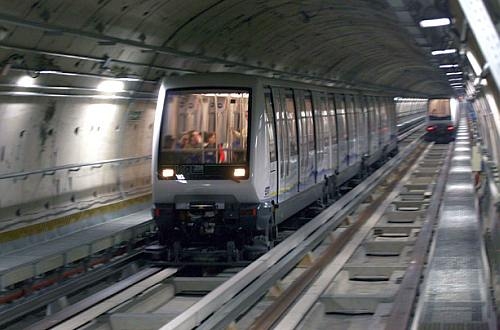
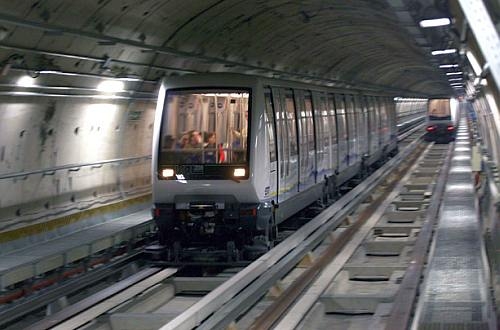
Line 1 of the Turin metro features the rubber-tyred VAL system supplied by Siemens. The first section opened on February 4 2006.
“The awarding of the contract for the trains and signalling system of Line 2 marks a fundamental milestone in the development of Turin’s new metro,” says Infra.To CEO, Bernardino Chiaia.
“Collaboration with Hitachi Rail will enable the city to equip itself with a modern, fully automated, and highly technological infrastructure in line with the most advanced international standards.”
For detailed data on European metro fleet orders, subscribe to IRJ Pro.