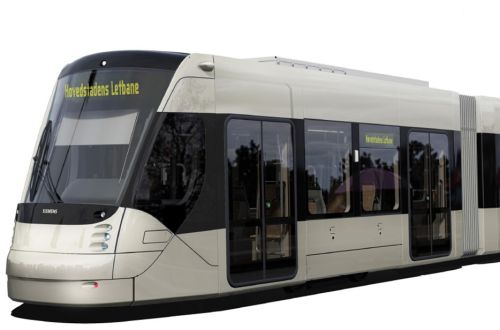
THE first stage of the Capital City Light Rail line opened in western Copenhagen on October 26. The section comprises the 13km southern stretch between Ishøj and Rødovre Nord, the location of the depot. The last trams operated in the Danish capital in 1972.
LRVs are operating at 10-minute intervals. This will be reduced to a 5-minute frequency when the 15km northern section to Lundtofte with 17 stations opens in summer 2026. The southern section has 12 stations.
The new light rail line will connect with six S-Train lines when it is completed and is expected to transport about 14 million passengers a year by 2030.
The Capital Region Light Rail is owned by the Capital Region of Denmark and 11 municipalities.
Cost increase
The project was originally estimated to cost DKr 6.2bn, but it had risen to DKr 8.2bn by 2022. The final cost is now expected to be DKr 9.6bn ($US 150m) due to delays in obtaining materials.
Contracts to implement the project were awarded in 2018. Danish construction companies MJ Erikkson, Per Aarsleff and CG Jensen were selected for the civil works packages. The transport systems contract was awarded to a consortium of Siemens and Aarsleff Rail, Denmark, with Siemens supplying 27 Avenio low-floor LRVs. The 36.9m-long, 2.65m-wide vehicles have a top speed of 70km/h and 64 seats, with capacity for up to 260 passengers.
A 15-year operations and maintenance contract was awarded to Metro Service, a subsidiary of Milan Transport (ATM), which also operates the Copenhagen Metro.
Construction of the 28km line, which follows Copenhagen’s Ring 3 highway, started in 2019.
For more information on European light rail projects, subscribe to IRJ Pro.