THE Italian Competition Authority (AGCM) has accepted and made binding commitments made by infrastructure manager Italian Rail Network (RFI) that include providing new entrant SNCF Passenger Italy with a minimum access package that would enable it to enter the domestic high-speed market.
RFI has made the commitments following an investigation launched by AGCM in March 2025 into suspected abuse of dominant market position by RFI and its parent Italian State Railways (FS), contrary to Article 102 of the Treaty on the Functioning of the European Union (TFEU).
RFI was alleged to have attempted to exclude new entrants by engaging in various practices related to the allocation of train paths, apparently delaying the entry of SNCF Passenger Italy into the domestic high-speed market.
The investigation centred on RFI’s procedures for allocating capacity on the high-speed network. RFI is alleged to have prioritised existing operators, FS subsidiary Trenitalia and its competitor Italo-NTV, offering less favourable paths to SNCF.
AGCM says that procedures were deemed potentially capable of hindering access to rail infrastructure and, in turn, the entry of new operators into the high-speed market. According to AGCM, the commitments it has approved will introduce significant changes, marking a major step forward for the high-speed market by promoting greater competition through the entry of a third operator and creating new opportunities to improve services, quality and competitiveness to the benefit of passengers.
RFI will assign SNCF a minimum access package of 18 paths a day on the Turin - Milan - Rome and Turin - Milan - Venice routes, ensuring their stability for 10 years. AGCM says this is intended to make the new operator’s entry into the market both effective and sustainable.
In addition, RFI will amend the rules set out in its network statement to bring them in line with the provisions of European Union (EU) Regulation 2016/545 on the procedures and criteria for framework track access agreements, concerning efficient use of infrastructure, the protection of passengers’ needs and the promotion of competition.
A transitional framework will be adopted immediately to protect SNCF and future new entrants, granting them priority in the allocation of available or under-used capacity to support a gradual and effective expansion of their services, AGCM says.
“These measures address the competition concerns identified at the start of the investigation,” AGCM says. “They ensure fair, transparent and non-discriminatory access to the high-speed rail network, making the market more open and competitive to the benefit of passengers and the wider system.”
SNCF response
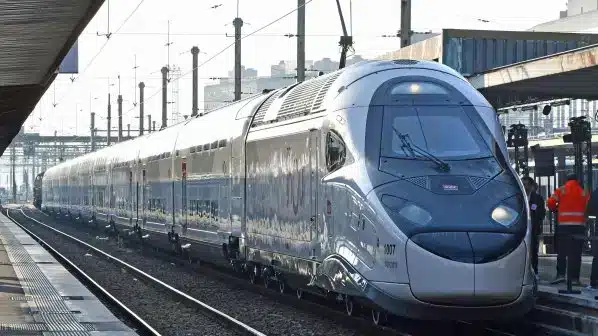
Welcoming AGCM’s decision to accept the commitments made by RFI, SNCF Passenger Italy said the minimum access package is essential to enabling it to launch an investment package in order to enter the Italian high-speed market in September 2027. SNCF plans to operate a fleet of 15 new TGV M double-deck trains in Italy, and is expecting to tap a potential market of around 10 million passengers a year. It also anticipates generating wider benefits estimated at over €480m a year, including GDP growth and over 4000 new direct and indirect jobs, while at the same time cutting journey times and reducing the average ticket price.
However, while the undertakings secured by AGCM mark a step forward, SNCF Passenger Italy says they are not sufficient to enable it to fully execute its business plan, which is based on operating 13 services a day in each direction, nine on the Turin - Naples route and four on Turin - Venice. The minimum package that RFI will provide does not include paths to Naples and comprises four Milan - Rome and two Turin - Rome paths a day in both directions, as well three Milan - Venice, two Venice - Milan and one Venice - Turin path a day.
Without its minimum path requirement, SNCF Passenger Italy says it will be unable to justify the investment required. It is therefore essential, the company says, that RFI quickly implements its other undertakings made to AGCM and revises its criteria for allocating paths, in order to provide SNCF Passenger Italy in the short term with the additional paths it has requested.
The company also notes that its entry into the Italian market is also dependent on obtaining access to rolling stock maintenance facilities and obtaining authorisation for its TGV M fleet to operate in Italy. In these areas, the support of the “the system as a whole” would be welcome, it says.
“SNCF Passenger Italy is counting on the commitment of all stakeholders to make its entry into the Italian market possible and effective, in full compliance with European regulations, in order to promote ever more sustainable mobility and guarantee passengers the benefits of increased competition and a wider range of services,” the company says.