About the author

David Briginshaw

David Briginshaw joined IRJ in 1982 as associate editor, and was appointed editor-in-chief in 2001. He has travelled the world extensively interviewing many of the CEOs and senior managers of the world's railways and transit systems which has given him an in-depth knowledge of the global railway industry. David Briginshaw is currently consulting editor and associate publisher of IRJ.
May 5, 2015 |

German rail industry turnover up 25% in 2014

The German rail industry achieved a 25% increase in sales last year to reach a new peak of €12.5bn. The results were announced by Mr Martin Lange, president of the German Rail Industry Association, reports David Briginshaw.

TURNOVER generated by members of the German Rail Industry Association (VDB) reached a new record of €12.5bn in 2014. This was 25% higher than in 2013, and nearly 15% more than in the previous peak year of 2010 when revenue reached €10.9bn. Domestic revenue rose by 26% from €5.3bn in 2013 to €6.7bn in 2014 and exports increased by 23% from €4.7bn in 2013 to €5.8bn last year.

VDB president, Mr Martin Lange (pictured), says the 25% increase in railway equipment revenue is mainly due to a large order backlog and the fact that rolling stock manufacturers could finally bill customers for vehicles which could not be delivered due to excessive delays in obtaining operating certificates from the Federal Railway Agency (EBA). Changes to legislation and the regulatory framework in Germany have finally eliminated the backlog in the approval process.

TLW May"In Germany alone, sales of rail vehicles and their components increased last year by 44% to €4.9bn, and the revenue from international business in this segment increased by about a quarter to €4.6bn," Lange says.

However, the VDB says the strong revenue growth is overshadowed by a decline in demand. Orders for railway equipment both domestically and from abroad fell by 36% last year to €9.5bn. Demand for locomotives and passenger rolling stock, as well as their components and subsystems, dropped by 45% in 2014 to €6.4bn. Domestic orders fell by almost half to €2.9bn, while orders from abroad were down 43% at €3.5bn.

"2014 was a rather poor year for major tenders," Lange revealed. "In addition, the conditions in important railway markets such as Russia and China have changed. EU sanctions against Russia due to the Ukrainian crisis are driving Moscow into the hands of China, while China is becoming increasingly technically self-sufficient and stronger in exporting. While German train manufacturers face heightened international competition, these developments offer opportunities for medium-sized suppliers."

Infrastructure-related revenue stagnated last year with total sales of €3bn. The real problem area is domestic sales, which fell by 5% to €1.8bn, while infrastructure exports increased by 9% to €1.2bn.

Orders for infrastructure equipment last year fell by 6% to €3bn, with domestic orders also down by 6% at €1.7bn and orders from outside Germany 13% lower than in 2013 at €1.3bn.

However, Lange predicts a noticeable upturn in business this year following a planned increase in spending on the existing rail network in Germany. Infrastructure spending by DB Networks will increase by about €1bn a year to around €4bn per year between 2015 and 2019.

"This significant increase in funding is urgently needed to address the glaring backlog of investment in the modernisation of Germany's rail infrastructure," Lange says. Looking at signalling, a third of the 3400 interlockings in Germany have an average of 80 years, while 13% are about 65 years old.

VDB also sees slow movement in the equipment of the major European rail corridors in Germany with ETCS and suggests the German government has sufficient funds to equip the Emmerich - Basle section of Corridor A linking Rotterdam and Genoa up to 2022.

"These advances are forward looking," Lange says, "but need to be implemented much faster in order to increase the competitiveness of rail services across borders. Paradoxically, high-tech Germany is not a leader in the European Union in the installation of ETCS."

The VDB is highly critical of the level of federal funding for the provision of regional rail services. The government has increased the funding by what the VDB describes as a meager 1.5% to €7.5bn, but the association is calling for the fund to be increased to €8.5bn followed by an annual increase of 2%. Otherwise the VDB warns the performance of environmentally-friendly regional rail services could suffer significantly.

While Lange applauds the European Union's Shift2Rail research initiative, he is highly critical of the lack of support for railway research by the German government, which he says has failed to include railway projects in its research initiatives: "While electric mobility is widely promoted for road transport, scant attention is paid to rail. Railway technology is an industrial core for Germany. This is a glaring shortcoming which needs to be addressed urgently."

"This is not only necessary to set the course for national transport, but it also makes sense for international competition policy if German railway engineering manufacturers want to continue to maintain their leading position in the world market in the face of growing competition from the Far East," Lange concludes.

April 29, 2015 |

Seismic shifts are reshaping the railway supply industry

THIS year is shaping up to be a watershed for the global rolling stock supply industry. A series of mergers, acquisitions and disposals, coupled with the growing importance of small and medium-sized enterprises are likely to have far-reaching consequences for the railway industry.

The massive merger between China's two train building giants, CNR and CSR, received final approval last month from China's Securities Regulatory Commission and the Ministry of Commerce, as well as anti-trust authorities outside China, and the first appointments have been made to the board of the new CRRC Corporation. This means the merger could be completed as early as next month.

CNR and CSR generated combined revenues of
$US 30.5bn between January and October last year, and achieved total profits of
$US 1.45bn. To put this in context the world's next largest train builder, Bombardier Transportation, had a turnover of $US 9.6bn for the full year and an Ebit of $US 429m.

CNR and CSR have so far focused their export efforts on Asia, South America, Africa and the Middle East. But with the Chinese government keen for the new company to boost exports there will be considerable pressure to enter new markets.

Speaking at the recent Railway Forum in Berlin, CSR chairman Mr Zheng Changhong, who has been nominated to the CRRC board along with his CNR counterpart, explained how China wants to become a manufacturing power focused on innovation achieved both independently and through the continued transfer and absorption of technology. He referred to the huge resources at the disposal of Chinese companies, noting that 10,000 R&D engineers participated in the development of the 380A high-speed train supported by the ministries of railways, science and technology. This could give CRRC a huge competitive advantage in the future.

Completion of the e12bn GE-Alstom deal, which involves GE acquiring most of Alstom's power business in exchange for GE strengthening Alstom's rail division, is awaiting approval from the European Commission's (EC) competition directorate, which is due to give its verdict on July 8. If the deal does clear this final hurdle then Alstom will be purely focused on rail transport and should become a much stronger competitor particularly in signalling and locomotives.

Hitachi's purchase of Italian train builder AnsaldoBreda and a 40% stake in signalling specialist Ansaldo STS is expected to be completed later this year subject to regulatory and antitrust approval. Hitachi Rail Europe already has a strong foothold in Britain having won several substantial orders for passenger trains, and chose Britain as the location for its rail business global headquarters. Despite having innovative and highly reliable products, Japanese companies have often found it difficult to compete because of the strength of the yen, so Hitachi's Italian acquisitions should prove an astute move by consolidating the company's presence in Europe and improving its chances of achieving its goal of becoming a strong global player.

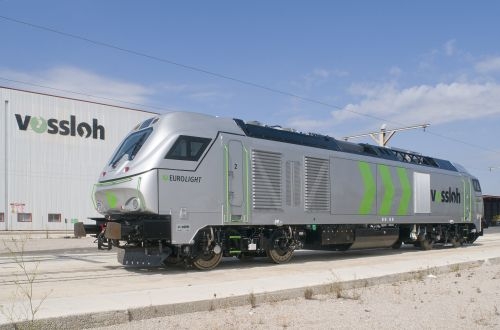
Vossloh is in the midst of restructuring its railway business and plans to sell off its locomotive and LRV manufacturing divisions in order to concentrate on infrastructure, where it is one of the main players. While Vossloh's vehicle building businesses are relatively small, they could prove attractive to a manufacturer looking to strengthen its position in the market, although the European locomotive market is highly competitive and has excess capacity.

If recent reports in the financial press are accurate, then another major change in the supply industry could be afoot. Bloomberg claims that Bombardier has hired UBS and Citigroup to advise it on a possible initial public offering or sale of Bombardier Transportation. The parent company is keen to shore up its loss-making aerospace division and one way to achieve this would be to sell its profitable rail business. This would have a profound effect on the market depending on who bought it, especially as it hard to see how a European or North American railway equipment company would be able to buy it, which would leave the door open to Asian companies looking to penetrate new markets.

Some of the smaller and medium-sized train builders have been steadily increasing their market share, most notably Stadler and CAF, and more recently some of the eastern European players such as Pesa and Škoda. These companies have proved adept at winning orders due to their agility, low overheads, and their ability to produce good products at competitive prices.

This has been aided by changes in the European market. The advent of open-access passenger operators and concessioning of local and regional passenger services has reduced the dominance of national railways and led to more smaller contracts, while traditional railways, most notably German Rail (DB), are becoming more receptive to bids from a wider range of suppliers.

While some companies are becoming increasingly focused on their core product, others are expanding their product range quite aggressively through acquisitions of niche players. Two notable examples of this are Knorr-Bremse and Wabtec, which are both developing a wide portfolio
of products.

By the end of this year the landscape of the railway supply industry could look quite different and these changes will shape the future of the railway industry for the next few years.

Sign up for the IRJ Rail Brief Newsletter